
No market to enter.
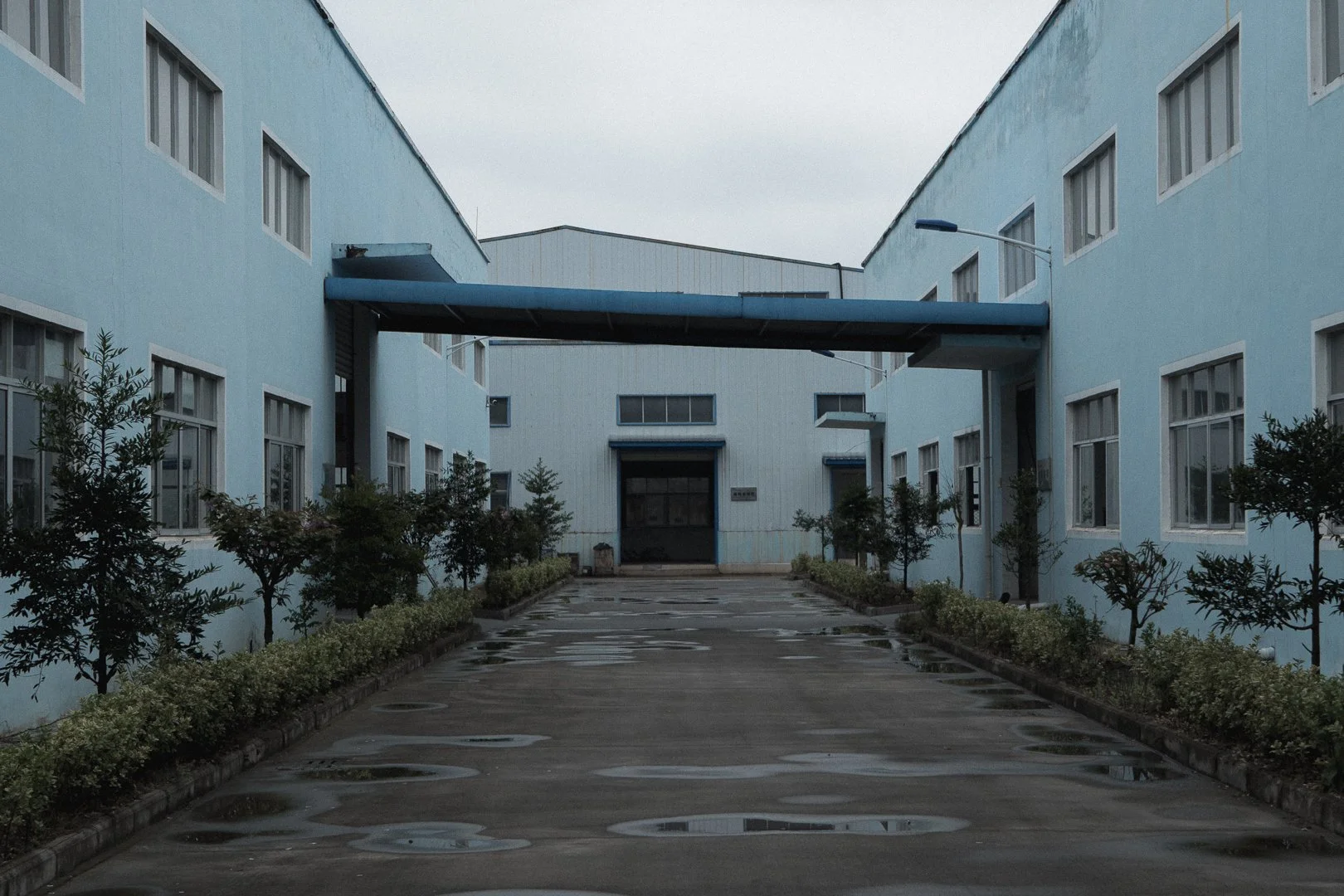
The brief was to assess whether the proposed market entry was feasible. The fieldwork answered a different question: whether the market the plan assumed existed at all.
The product was sound. A foreign manufacturer of atmospheric water generation equipment — a category that extracts drinking water directly from humidity in the air. The company had built a working business in markets defined by water scarcity, and was looking at China as the next major geography. HQ commissioned the review to map the market, identify the right entry model, and recommend a plan.
We ran an extended Pre-Mortem — about twenty senior-level interviews across manufacturers, distributors, end-users, and industry experts, conducted across multiple cities in China. The plan was to build an evidence base from the bottom up rather than rely on published market figures.
The dominant local player was citing China revenue in the tens of millions of US dollars. Other domestic suppliers were citing the dominant player's data when describing the market to outside parties. Industry coverage was repeating both.
The fieldwork did not support those numbers.
Distributors of the dominant player reported their own sales falling from tens of thousands of dollars in 2019 to zero in 2021. One was giving away remaining inventory. Major institutional clients cited as users in industry coverage had returned the machines after donation or trial placement, citing high noise, high heat output, and units that did not work in winter. The dominant player had closed two of four factories. Several of the largest non-dominant players were generating ninety percent of revenue from exports.
The exit dynamics were uniform. Distributors leaving. Manufacturers shifting to exports. End-users sending machines back. The published market and the working market did not match.
The structural finding was simpler. The product solves a problem defined by water scarcity. China's drinking water issue is contamination, not scarcity. The dominant alternative — point-of-use water purification — is cheaper, better understood by buyers and channels, and supported by policy direction. No amount of marketing or distribution work fixes a product that solves the wrong problem.
The report concluded: Do not proceed as currently defined. The product had a market. China was not it.
CHINA PRE-MORTEM REVIEW
Proposed Market Entry: Atmospheric Water Generation in China
Prepared for: [Client Name] Prepared by: GroupMAV Date: 2021-XX-XX CONFIDENTIAL
1. Mandate
Assess whether the proposed market entry plan for atmospheric water generation products in China is viable as currently defined.
2. Scope
This is an extended Pre-Mortem. Findings draw on ~20 senior-level interviews with manufacturers, distributors, end-users, and industry experts across China.
3. Executive Conclusion
The proposed market entry should not proceed as currently defined.
The premise of the plan — that there is a developing China market for atmospheric water generation products that a foreign manufacturer can enter and serve — does not hold under field examination. The market exists, but it is small, structurally weak, and dominated by local Chinese players with cost, access, and channel advantages a foreign entrant cannot match.
The China atmospheric water generation market is materially smaller than published figures suggest. Field data places total annual sales an order of magnitude below the headline figures cited across the industry. Excluding closed channels — government and government-related procurement, which a foreign supplier cannot access — the addressable commercial market is smaller still.
The dominant local player is overstating its sales. Published figures cited across the industry overstate actual sales by an estimated order of magnitude. Distributor data, end-user behavior, and our own field observation do not support the headline numbers in circulation.
End-user demand is weak and concentrated in showcase use cases. Donated and distributor-placed machines are being returned. Distributors are exiting the segment. Active users cite high noise, high heat output, high maintenance, and machines that fail in cold weather.
The product fits markets defined by water scarcity. China is defined by water contamination, not water scarcity. The dominant alternative — water purification — is cheaper, better understood, and policy-supported.
The plan should not proceed in China as currently defined. The product itself is sound; the market premise is wrong. The strategic ambition is more likely to be realized in geographies where water scarcity, not water contamination, drives demand.
4. Key Findings
4.1 The published market is not the actual market
The China atmospheric water generation market is widely cited at headline figures that imply a serious commercial opportunity. The dominant local player publishes figures suggesting it alone generates revenues in the tens of millions of US dollars from China sales. Other domestic suppliers cite the same player's data when describing the market to outside parties.
Field-level evidence does not support those figures.
We built a market estimate from the bottom up, using distributor sales data, end-user purchasing data, regional supplier interviews, and direct observation of channel activity. The estimate is an order of magnitude below the published figures cited across the industry. Excluding closed channels — government and government-related procurement, which a foreign supplier cannot access — the addressable commercial market is smaller still.
That market does not support the entry plan. It supports a small number of local players operating on cost, access, and channel advantages a foreign entrant would not match — and several of those local players are themselves shifting focus to exports.
4.2 Published numbers from the dominant player overstate actual sales
The dominant local player publishes sales figures that, on examination, do not reconcile with what we observed in the channel.
We base this conclusion on three lines of evidence.
First, distributor data. Specific distributors of the dominant player reported sales trajectories of approximately USD 30,000 in 2019, USD 15,000 in 2020, and USD 0 in 2021. One interviewee stated he was ceasing operations and giving away remaining inventory. These figures do not aggregate to the published company-level numbers under any plausible distributor count.
Second, end-user data. Major institutional clients cited in industry coverage as users of the dominant player's products had, in fact, returned the machines after donation or trial placement. Stated reasons were poor performance, high energy consumption, high noise, and machines failing in winter conditions. The publicized user base is not the actual user base.
Third, channel structure. The dominant player has reduced production capacity by closing two of four factories. Distributors are leaving the relationship. The company has shifted focus toward exports for the coming year. None of this is consistent with the published growth narrative.
The pattern is consistent with a dominant player whose published figures function as marketing rather than reporting. We do not assess motive here. We note that the entry plan, if it proceeds, would be entering a market whose published metrics cannot be relied on.
4.3 End-user demand is weak
Demand on the ground is weaker than the published market profile suggests.
Active machines in the home and office sector are concentrated in showcase use cases — small offices buying high-end units to signal environmental awareness or technical sophistication to clients. This is a niche, not a market. The buyers we interviewed identified the purchase as a branding choice, not a utility choice. Re-purchase rates and reference activity were low.
Donated and trial-placed machines are being returned. Returns cite recurring patterns: high noise, high heat output during operation, high maintenance fees, poor service response, and units that do not function reliably in winter conditions. One model in particular — a tea-table integrated unit — was identified across multiple interviews as effectively unusable in normal conditions.
Distributors interviewed were uniformly pessimistic about the home and office segment. Several were exiting. None projected meaningful growth.
The commercial and industrial sectors are smaller still, concentrated in two specific industrialized regions, and held by local Chinese players whose cost base, channel relationships, and government access an incoming foreign supplier would not displace at viable economics.
4.4 The product solves a problem the China market does not have
China's drinking water issue is, with limited regional exceptions, a contamination problem rather than a scarcity problem. The dominant alternative to atmospheric water generation in China is water purification — point-of-use filtration that takes municipal supply and removes contaminants.
Water purifiers are cheaper to acquire and operate, are well understood by buyers and channels, and are increasingly supported by policy direction. Recent policy guidance is pushing institutional buyers toward direct drinking water purification systems and away from bottled water — which is the substitution path that benefits purifiers, not atmospheric water generators.
There is a structural problem with the entry plan. The product solves a problem (water scarcity, contamination of source water, lack of municipal infrastructure) that other markets have. It does not solve a problem that China has at scale. Marketing effort, distribution build-out, and product localization cannot overcome a category-level mismatch between product and market.
4.5 Local operators are exiting, not building
The clearest signal about a market is what incumbents are doing. In this market, the signals are uniform.
The dominant local player is shifting focus toward exports.
Three of the four largest non-dominant players generate over 90% of revenue from exports.
Distributors are exiting at the segment level. One interviewee stated explicitly that he would cease operations of his atmospheric water generation business by year-end.
A distributor in central China stated the segment could not be developed and announced an exit at year-end.
The active manufacturers we interviewed described local market growth in muted or pessimistic terms. None described it as an environment a new foreign entrant should be trying to enter.
Local Chinese operators have cost, access, and channel advantages that any foreign entrant would lack. When operators with those advantages are leaving, an entrant without them should not be entering.
5. Cost of Inaction
If the plan proceeds as currently defined, the likely outcomes are as follows.
Sales will undershoot plan. The company will face the same constraints other suppliers face — small addressable market, weak end-user demand, channels held by local players with structural cost and access advantages, policy alignment around purifiers rather than generators. Performance against plan will diverge from expectation within the first year.
Resources committed to China will be unavailable for markets where the product fits. Geographies where water scarcity drives demand — the Middle East, Africa, parts of South Asia and Latin America — represent the natural fit for atmospheric water generation as a category. Capital, attention, and partner relationships invested in China are not available elsewhere. A category-mismatched entry consumes them anyway.
Channel commitments will be difficult to unwind. China distributor and partner agreements typically include duration commitments, exclusivity terms, and prepayment structures that survive performance disappointment. The cost of correction is materially higher after channel commitments are made than before.
The plan can be reset now. Once the entry is in motion, internal commitments harden around it and the cost of correction goes up — financial, organizational, and political.
6. Recommended Action
What must change
Do not execute the proposed market entry plan. The premise of an addressable, developing China market for this product does not hold under field examination.
Reframe the strategic question. The question is not "how do we enter China"; it is "where does this product fit, and what is the right sequence of geographies to enter." China should be assessed against that broader frame, not as a default destination.
Test the markets the product is built for. Geographies where water scarcity drives demand are where the product fits. A field assessment of one or two of these — comparable in depth to this review — should precede the next major commitment.
What must be tested first
Verify that the growth plan can be met outside China. If the company's growth plan requires a China presence specifically — for investor narrative, supply chain proximity, or other reasons not driven by end-market demand — that requirement should be surfaced explicitly before this report's findings are accepted or rejected.
What should not be done
Do not adjust the entry plan to "make China work." Channel restructuring, pricing adjustments, or partner changes do not address a category-level mismatch between product and market.
Do not interpret the dominant local player's published figures as a benchmark. Those figures do not appear to reflect actual market activity and should not be used as input to revised planning.
Do not enter on the assumption that the market will develop. The market's existing operators are not signaling development. They are signaling exit.
7. Decision
Do not proceed as currently defined.
The China atmospheric water generation market does not support the proposed entry. The product is well suited to markets defined by water scarcity; China is not such a market. The strategic ambition is more likely to be realized through entry into geographies that match the product's fit.
What happened next
The report was delivered at the end of September. The client did not respond.
Three weeks later I had heard nothing. I sent a follow-up. The reply, when it came, dismissed the data as old, questioned the methodology, and asked for cosmetic changes — competitor logos added for credibility, a different cover format. The findings were not engaged with.
I asked for a meeting to walk through the findings. None was scheduled. I asked again. The first call took place at the end of November, two months after delivery, and only after repeated requests through the referrer who had introduced us.
That call was the first time I spoke with the China GM. Throughout the engagement he had been unavailable. On the call, one-on-one, he refused to discuss the findings with me. He wanted to speak directly with my interviewers instead — to find someone he could pressure into a different answer. I declined. The call ended.
That was the last conversation. The engagement closed without further work. The findings were never formally accepted or rejected — they were simply set aside.
In the years since, the company has not built a meaningful presence in China. It has built deployments in markets shaped by water scarcity — exactly the geographies the report identified as the natural fit.
The China atmospheric water generation market continues to be described in published research as substantial and growing. The figures cited across reports vary by an order of magnitude for the same year. The reports cite each other rather than primary sources.
HQ commissioned the review. The local executive had already committed to the plan. The messenger became the problem.
If a market entry plan is being built on figures that have not been tested, test them now.